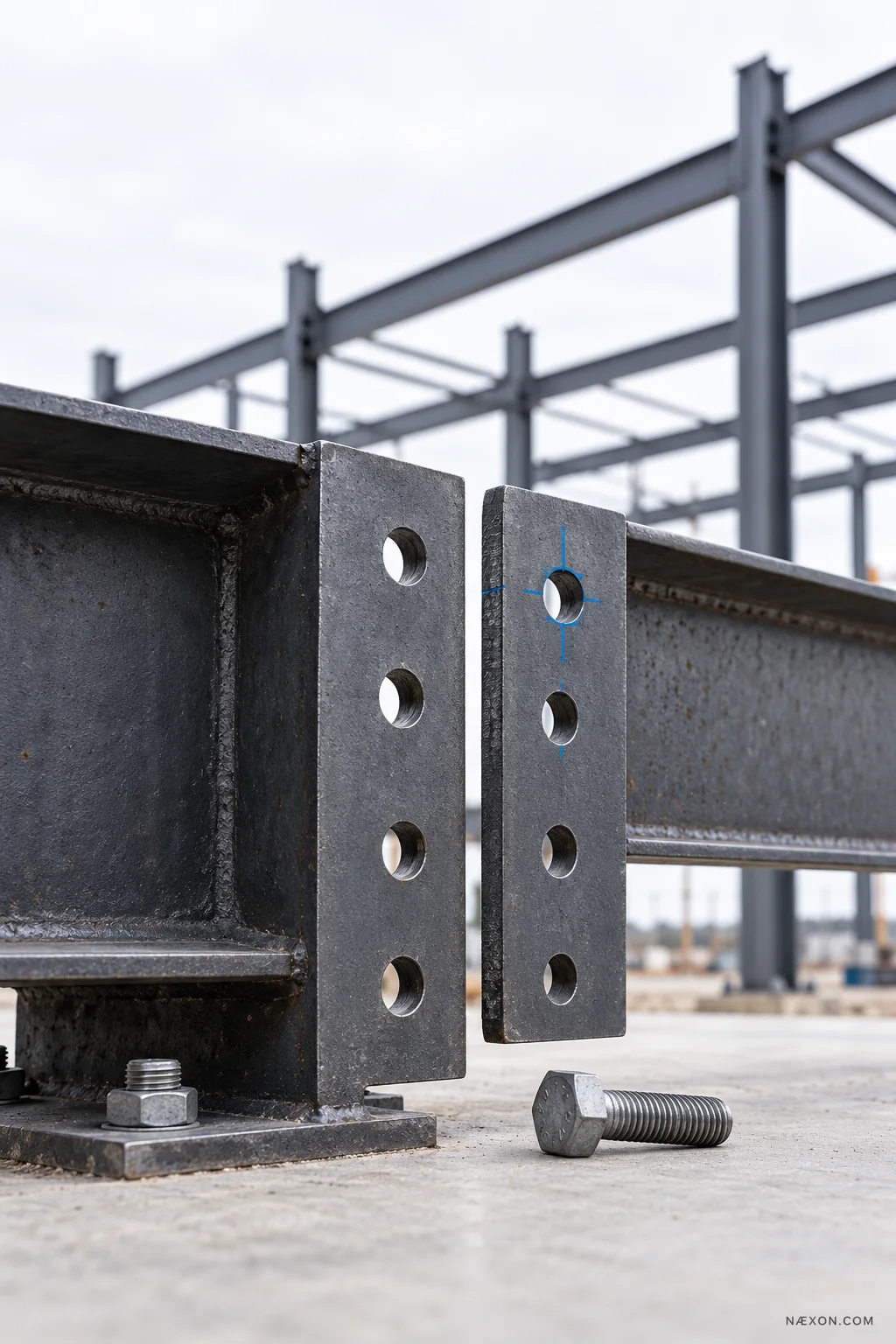
The beam is in place, the connection plates are close, and the bolts still will not go through. It is tempting to reach for a bigger drift pin and pull harder. First, find out why the holes are off.
A fit-up problem may come from the member being in the wrong position, a connection assembled out of sequence, accumulated tolerances, or a fabrication error. The right response depends on the cause. Forcing the connection can hide the problem while putting unintended stress into the steel.
Confirm the right pieces are in the right places
Check the member mark against the erection drawings. Verify its orientation, end connection, elevation, and the location of the connection plates. Similar beams can have different hole patterns or details at opposite ends.
Look at the entire connection before focusing on one hole. Are the plates against the correct faces? Is a shim or other specified component missing? Is a bolt already installed in a position that prevents the parts from seating as intended?
Check the position of the steel
The hole pattern may be correct while the member is still slightly out of position. Check the bearing point, elevation, column position, and the alignment of adjoining members. Review the approved erection sequence and temporary bracing requirements before asking the crane to move a member or changing a connection.
A mismatch at one joint can reflect movement elsewhere in the frame. Pulling that joint into place without understanding the movement may create another problem at the next connection.
Look for accumulated fit-up differences
Individual pieces can be fabricated within their allowed tolerances and still produce a difficult field fit when several dimensions stack together. That is one reason an ironworker checks the member and the surrounding frame before declaring a hole pattern wrong.
Measure and record the mismatch. Note whether every hole is shifted in the same direction, only one plate is affected, or the pattern differs from the drawing. Those details help the foreman, fabricator, and engineer identify the cause.
Use alignment tools for their intended purpose
Drift pins can help align connection plies during fit-up under the erection plan. They do not replace required bolts or provide a reason to drag a badly positioned member into place. Keep the member supported and maintain the connection’s required stability throughout the work.
If ordinary fit-up cannot bring the connection together, stop and report the condition. Do not enlarge holes, torch-cut a plate, substitute hardware, or change the connection detail without the required review and approval. The fix must preserve the connection the structure was designed to have.
Leave a record the next crew can use
Photograph the connection and mark the member, grid location, drawing detail, and measured discrepancy. Record which bolts can be installed and what temporary support remains in place. Once an approved correction is issued, verify the fit and complete the connection under the specified bolting procedure.
The takeaway: bolt holes that will not line up are a clue about the member, the connection, or the frame. Check the marks, orientation, position, and sequence first. Measure the mismatch before anyone changes the steel.