Walk onto almost any construction site, refinery, or industrial shutdown, and you’ll notice hard hats in different colors. Many workers assume every color has a universal meaning—but that’s only partly true.
The reality is that while many companies follow common color conventions, there is no OSHA regulation requiring hard hat colors to mean the same thing everywhere. Every employer can establish its own color system.
Here’s what the colors usually mean—and when those assumptions can get you into trouble.
White Hard Hats
White is commonly associated with leadership and technical personnel.
You will often see white hard hats worn by:
- Project managers
- Construction superintendents
- Engineers
- Inspectors
- Foremen
- Visitors in some facilities
On many industrial jobsites, seeing a white hard hat often means you’re talking to someone responsible for planning, coordination, or quality control.
Yellow Hard Hats
Yellow remains one of the most common hard hat colors worldwide.
They’re frequently worn by:
- General laborers
- Equipment operators
- New workers
- Construction crews
Because yellow is highly visible, it’s a practical choice for workers who spend long hours in active work zones.
Blue Hard Hats
Blue hard hats are commonly worn by skilled trades, although this varies from company to company.
You may find blue hard hats on:
- Electricians
- Carpenters
- Pipefitters
- Technical specialists
Many companies also use blue for workers with specialized responsibilities.
Orange Hard Hats
Orange is designed to stand out.
These are often issued to:
- Signal persons
- Traffic control personnel
- Road crews
- Spotters
- Workers operating near heavy equipment
The bright color helps equipment operators identify personnel quickly.
Green Hard Hats
Green frequently represents safety.
You may see green hard hats worn by:
- Safety professionals
- HSE coordinators
- Environmental personnel
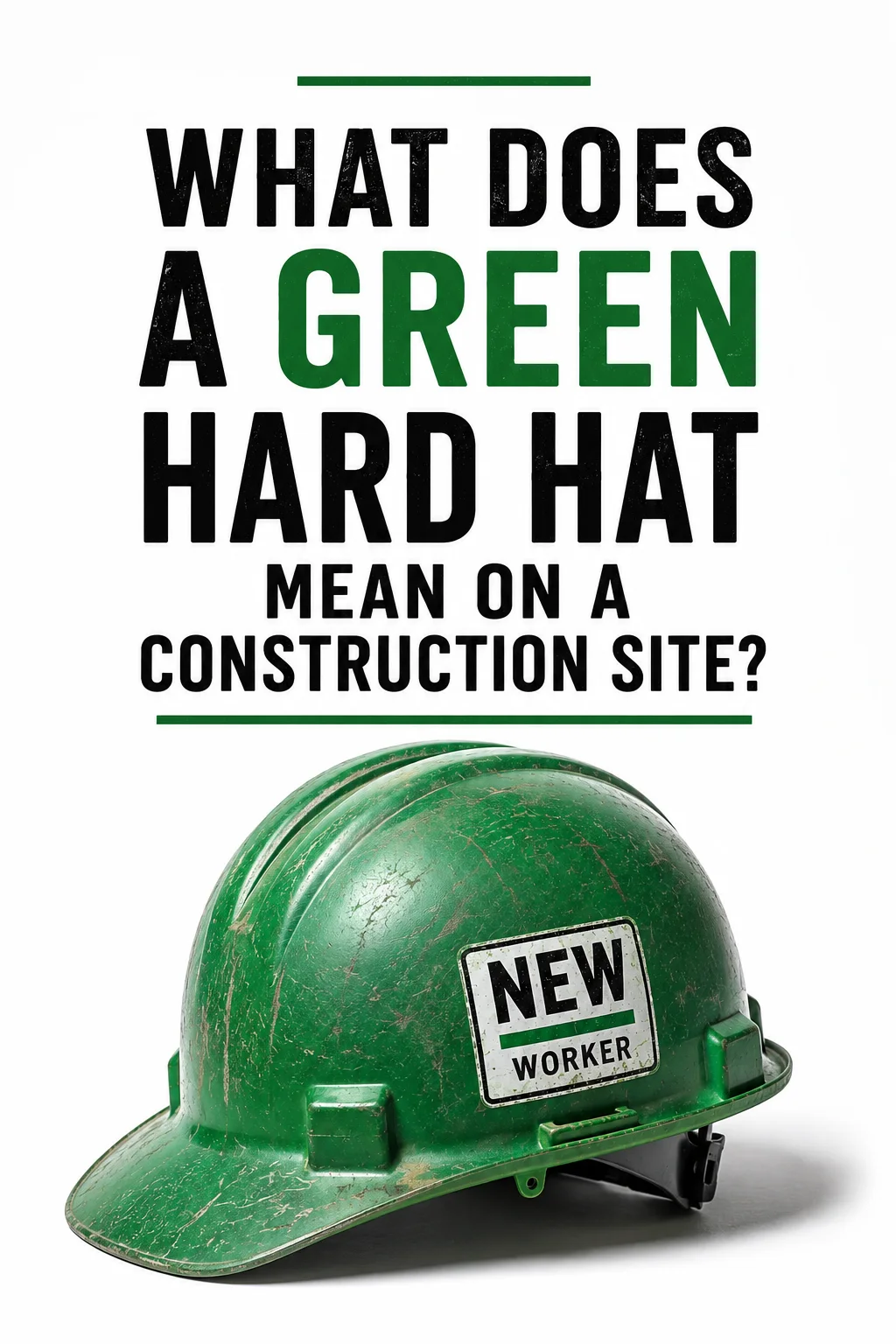
- New employees (at some companies)
Some contractors also assign green hard hats to apprentices or probationary workers, making this one of the least consistent colors across the industry.
Red Hard Hats
Red usually signals emergency response or high-risk responsibilities.
Examples include:
- Fire watch
- Emergency response teams
- Rescue personnel
- Fire brigade members
However, some companies simply use red for supervisors or visitors, so never assume without knowing the site’s policy.
Gray Hard Hats
Gray doesn’t have one universal meaning.
Depending on the employer, gray may identify:
- Visitors
- Maintenance personnel
- Experienced craftsmen
- Contractors
Its purpose changes from one facility to another.
Brown Hard Hats
Brown is less common today but still appears in certain industries.
It may be assigned to:
- Welders
- Workers performing hot work
- High-heat operations
Because welding helmets usually cover the hard hat, brown has become less common than it once was.
The Truth: There Is No Universal Color Code
This surprises many workers.
OSHA requires employers to provide proper head protection—but OSHA does not assign specific meanings to hard hat colors.
That means:
- A white hard hat could mean superintendent on one project.
- The same white hard hat could simply identify a visitor somewhere else.
- A green hard hat could indicate safety personnel—or a first-day apprentice.
Always follow your employer’s site-specific PPE policy instead of assuming what a color represents.
Why Companies Use Different Colors
Color coding helps workers quickly identify people without reading names or badges.
Benefits include:
- Faster communication
- Easier supervision
- Improved emergency response
- Better organization on large jobsites
- Increased visibility for specialized personnel
On shutdowns involving thousands of workers, a simple color system can make operations more efficient.
The Hard Hat Matters More Than the Color
The most important part of any hard hat isn’t the paint—it’s whether it’s the right protection and in good condition.
Before every shift, check for:
- Cracks
- Deep scratches
- UV damage
- Brittle plastic
- Missing suspension components
- Expired manufacturer recommendations
A faded hard hat that still meets safety requirements protects you far better than a brand-new one that’s worn incorrectly.
Final Thoughts
Hard hat colors can tell part of the story—but they don’t tell the whole story.
Whether your helmet is white, yellow, blue, green, or orange, what matters most is wearing it correctly, inspecting it regularly, and understanding your jobsite’s specific safety rules.
At the end of the day, your hard hat isn’t a symbol of status—it’s one of the most important pieces of PPE standing between you and a life-changing injury.