Many workers shopping for industrial clothing focus on one number—the price tag.
At first glance, choosing the least expensive work shirt or pair of work pants may seem like the smartest financial decision. After all, if two shirts look similar on the hanger, why spend more?
The answer usually becomes obvious after several months on the job.
Industrial workwear isn’t judged by how it looks on the day it’s purchased. It’s judged by how well it performs after hundreds of hours of climbing ladders, carrying pipe, welding, crawling through confined spaces, working in extreme temperatures, washing away sweat and grime, and repeating that routine week after week.
For experienced craftsmen, value matters far more than initial cost.
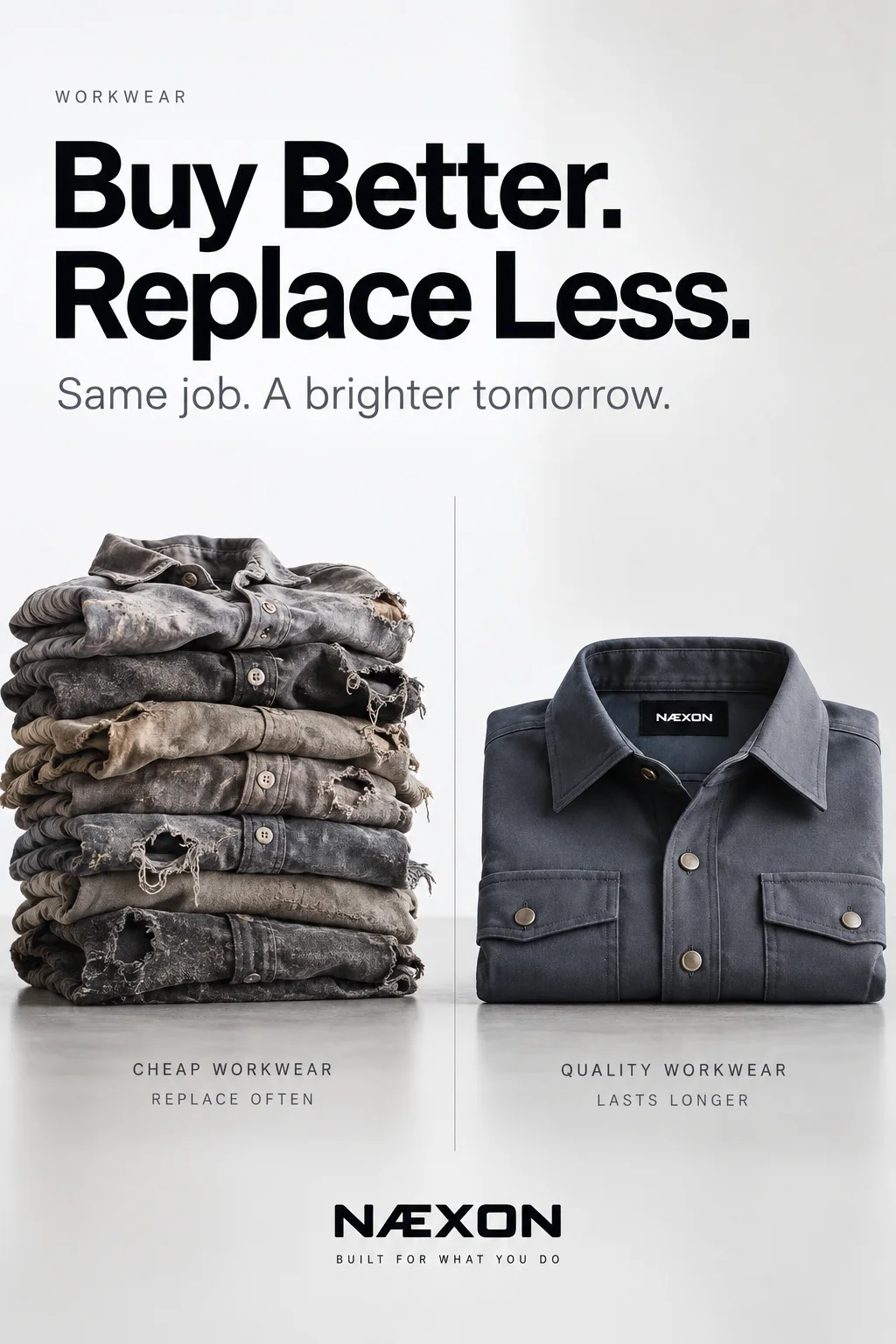
Cheap Workwear Often Costs More Than You Think
A lower purchase price doesn’t always mean lower overall cost.
A shirt that tears after a few months, loses its shape after repeated washing, or becomes uncomfortable during long shifts may need to be replaced several times before a premium garment reaches the end of its service life.
Those repeated purchases gradually erase any savings that seemed attractive at the checkout counter.
Many experienced tradesmen eventually discover that buying quality once is often less expensive than buying average products over and over again.
Long-term value—not short-term savings—is what truly matters.
Industrial Jobs Are Hard on Clothing
Few work environments are tougher on apparel than industrial jobsites.
Every shift exposes clothing to abrasive steel, rough concrete, welding sparks, sharp edges, pipe racks, ladders, heavy tools, grease, dirt, and repeated movement.
Shutdowns, turnarounds, and maintenance outages often require workers to perform physically demanding tasks for twelve hours a day, sometimes seven days a week.
Under those conditions, weak stitching, thin fabric, and poor construction quickly become obvious.
Workwear built specifically for industrial environments is designed to withstand those daily demands far better than ordinary clothing.
Durability Means Fewer Replacements
One of the biggest advantages of premium workwear is longevity.
Quality garments typically feature reinforced seams, stronger stitching, heavier-duty construction, and fabrics selected for repeated industrial use.
While no shirt lasts forever, durable workwear often remains serviceable through significantly more wash cycles and work hours than lower-quality alternatives.
Replacing clothing less frequently saves money, reduces downtime spent shopping for new gear, and provides greater consistency throughout the year.
Workers who rely on their clothing every day often appreciate that reliability just as much as the garment itself.
Comfortable Workers Stay More Productive
Comfort isn’t just a luxury.
It’s a performance advantage.
Industrial workers routinely climb stairs, kneel beside piping, crawl under equipment, reach overhead, carry tools, and walk several miles during a single shift.
Poorly fitting clothing restricts movement, traps heat, and becomes increasingly uncomfortable as the day progresses.
Comfortable garments help reduce distractions, allowing workers to concentrate on precision, craftsmanship, and completing the task safely.
By the end of a twelve-hour shift, even small improvements in comfort can make a noticeable difference.
Better Workwear Helps Maintain a Professional Appearance
Industrial workers represent more than themselves.
Whether employed directly by a plant, working for a contractor, or traveling from outage to outage, appearance reflects professionalism.
Clothing that holds its shape, resists excessive fading, and continues looking presentable after repeated washing creates a positive impression on supervisors, coworkers, and clients.
A clean, professional appearance demonstrates pride in the work and respect for the trade.
Quality garments tend to maintain that appearance much longer than inexpensive alternatives.
Reliable Clothing Builds Confidence
Experienced craftsmen understand the importance of dependable equipment.
They invest in quality boots because they spend all day on their feet.
They buy reliable hand tools because precision matters.
They maintain their welding machines, levels, and measuring tools because they depend on them every day.
Workwear deserves the same consideration.
When workers trust the equipment they’re wearing, they spend less time worrying about torn seams, broken buttons, or worn-out fabric and more time focusing on the work itself.
Confidence comes from knowing your gear is ready for another demanding day.
Cheap Clothing Often Has Hidden Costs
The true cost of inexpensive workwear extends beyond replacement frequency.
Workers may also experience:
- Reduced comfort during long shifts
- Faster fading and shrinking
- Premature seam failure
- Poor fit after repeated washing
- More frequent shopping for replacements
- Lost productivity caused by uncomfortable clothing
Individually, these issues may seem minor.
Collectively, they often cost far more than the difference between an inexpensive garment and a premium one.
Think in Years, Not Weeks
One of the biggest differences between experienced and inexperienced buyers is perspective.
New workers often compare today’s prices.
Veteran craftsmen compare several years of ownership.
A shirt that costs twice as much but lasts three or four times longer becomes the better investment.
The same principle applies to boots, gloves, jackets, and nearly every piece of equipment used on industrial jobsites.
The lowest purchase price rarely delivers the greatest long-term value.
Quality Is Part of Professionalism
Professional tradesmen take pride in their work.
That pride is reflected not only in the projects they complete but also in the equipment they choose to use.
Reliable workwear communicates preparation, professionalism, and attention to detail.
While clothing alone doesn’t make someone a skilled craftsman, dependable gear supports the consistency and confidence that experienced workers bring to every shift.
Investing in quality isn’t about spending more.
It’s about making smarter decisions that continue paying dividends over time.
Final Thoughts
Industrial workwear is an investment in comfort, durability, productivity, and long-term value. While inexpensive clothing may appear to save money initially, the true cost often becomes clear after months of demanding work and repeated replacements.
Quality garments are built to withstand the realities of industrial maintenance, construction, fabrication, and manufacturing. They help workers stay comfortable through long shifts, maintain a professional appearance, and spend less time replacing worn-out clothing.
At Næxon, we believe hardworking professionals deserve workwear that performs day after day, project after project. That’s why we focus on building durable, premium industrial apparel designed to outlast the demands of the toughest jobsites and deliver value long after the day it was purchased.
Related Articles
- The Ultimate Guide to Industrial Workwear
- How to Choose the Right Industrial Workwear for Your Job
- The Evolution of Industrial Workwear: From Denim Overalls to Modern FR Apparel
- The Complete Guide to FR Shirts
- The Complete Guide to Refinery Workwear
- The Hidden Cost of Cheap FR Clothing: What Every Welder, Pipefitter, and Electrician Should Know
NÆXON — BUILT FOR THE HARDEST WORKERS ON EARTH.